Years before the main events
The Child’s Bow-and-Arrow Murder
In an old case known to [Mr. Treves](entity:character-recall-character-mr-treves-73ef573710a0), one child died after being struck by an arrow during play. A farmer had previously seen another child practising with a bow, making the supposed accident look like a murder carefully disguised as childhood mishap.
Mr. Treves never learned whether his suspicion was correct. He chose not to expose the child, deciding that the future of a child deserved the benefit of doubt; the unresolved case would later give him a way to unsettle someone who recognized its relevance.
Years before the main events
Nevile and Audrey’s Marriage
[Nevile Strange](entity:character-recall-character-nevile-strange-e0af118f700d) married [Audrey Strange](entity:character-recall-character-audrey-strange-273a76c1d515), who loved him partly because his confident, athletic presence seemed to make him more real than she felt herself to be. For eight years they lived together, while [Thomas Royde](entity:character-recall-character-thomas-royde-eba79e5cf28e), Audrey’s childhood companion, kept his love for her largely to himself.
That marriage became the setting for a hidden rupture. What appeared to the world as Nevile’s choice to leave his wife would eventually prove to conceal a very different history.
Before Audrey’s divorce
Audrey and Adrian’s Affair
Audrey fell in love with [Adrian Royde](entity:character-recall-character-adrian-royde-0063cc3e51c5), Thomas’s brother, and planned to leave Nevile. She went to meet Adrian, but he never arrived; he had been killed in a motor accident before their escape could begin.
The loss left Audrey devastated and returned her to the Royde family home in a state of collapse. The affair remained concealed, and its truth would later overturn the apparent motive behind the murder at [Gull’s Point](entity:location-recall-location-gull-s-point-adaa155ed14f).
After Adrian’s death and before Nevile’s second marriage
Nevile’s Chivalrous Divorce
Nevile came to Audrey while she was grieving and offered to take the blame for their separation. He arranged for her to divorce him without exposing her relationship with Adrian, then married [Kay Strange](entity:character-recall-character-kay-strange-a2b3a7533c39), allowing the public to believe that he had left Audrey for Kay.
Audrey refused his financial allowance, and Nevile’s discreet protection helped preserve her reputation. His apparent generosity concealed a fear she could not explain: she increasingly felt unsafe around him, though she blamed herself for that terror.
November 19 before the January events
Mr. Treves’s Zero-Hour Theory
After lawyers discussed a recent murder trial, [Mr. Treves](entity:character-recall-character-mr-treves-73ef573710a0) redirected their attention from legal arguments to the people and accidents that had converged to bring a crime about. He argued that a murder story should begin long before the killing, with the separate lives that gradually move toward one decisive moment.
He called that convergence “Towards zero,” then went home and imagined an elderly man opening a letter as the unwitting subject of a future crime story. The letter abruptly disturbed his reverie and threatened to alter his plans.
January 11
MacWhirter’s Failed Suicide Attempt
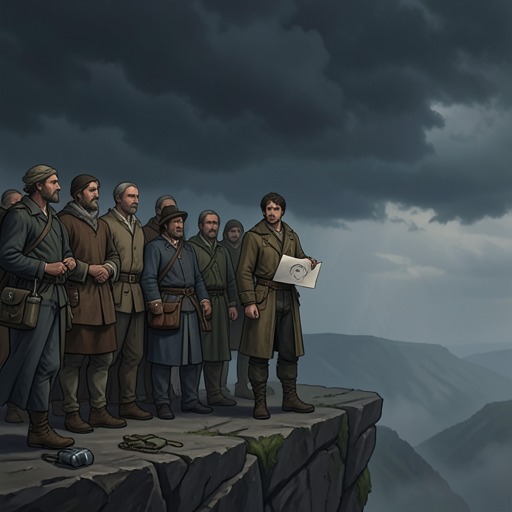
[Angus MacWhirter](entity:character-recall-character-angus-macwhirter-870878fed301), unemployed, ill, abandoned by his wife and despairing of any future, tried to jump from [Stark Head](entity:location-recall-location-stark-head-0032cbb3cb2b). A tree on the cliff caught him, and rescuers brought him to hospital with a broken shoulder instead of letting him die.
He resented the rescue as an intrusion into what he regarded as his own decision. The attempt would later become the unlikely beginning of his connection to Audrey and the investigation at [Gull’s Point](entity:location-recall-location-gull-s-point-adaa155ed14f).
January, during MacWhirter’s hospital stay
The Nurse’s Argument for Living
In hospital, MacWhirter argued with a young nurse that ending his life was a rational choice and no one else’s business. He explained that he had lost his job after refusing to lie for his former employer, then lost his wife and health as his circumstances deteriorated.
The nurse answered with simple conviction that he might still be needed somewhere, merely by being at a particular place at a particular time. MacWhirter could not prove her wrong, and, unexpectedly, he realized that he did not intend to try suicide again.
February 14
The September Murder Scheme
A solitary planner wrote out a meticulous design for murder, calculating the victim, method, setting and likely reactions. The plan was not rigid in every detail, but its author believed that each contingency had been considered and that other people’s virtues and faults could be made to serve one evil purpose.
The writer destroyed the pages in the fire, keeping the scheme only in memory, and marked a date in September. The concealed plan established the long preparation behind the apparently sudden crisis at [Gull’s Point](entity:location-recall-location-gull-s-point-adaa155ed14f).
March 8
Sylvia’s False Confession
At [Meadway](entity:location-recall-location-meadway-793a1f0859d6), [Superintendent Battle](entity:character-recall-character-superintendent-batt-089d162e4e78)’s daughter Sylvia confessed to a series of small thefts after the headmistress identified her through a supposed psychological test. Battle immediately saw that Sylvia was not a thief: she had panicked under suspicion and admitted a crime she had not committed because confession brought relief.
He insisted that the school call in the police to find the real culprit, correctly suspecting another girl. The episode gave Battle personal experience of how an innocent person might accept guilt under emotional pressure, a lesson that would later help him understand Audrey.
April 19
Kay’s New Marriage and Audrey’s Shadow
At home, Nevile and Kay discussed their visit to [Lady Tressilian](entity:character-recall-character-lady-tressilian-2e68f0ee3f99), whose household remained closely attached to Audrey. Kay resented being treated as an interloper and spoke contemptuously of Audrey, while Nevile admitted that he had treated his first wife badly and still carried guilt about it.
Nevile unexpectedly proposed that both couples stay at [Gull’s Point](entity:location-recall-location-gull-s-point-adaa155ed14f) together in September. Kay questioned whether Audrey would truly welcome the arrangement, but Nevile insisted that it would make everyone friends and ease his conscience.
April 30
Lady Tressilian Rejects the Idea
[Lady Tressilian](entity:character-recall-character-lady-tressilian-2e68f0ee3f99) considered Nevile’s proposal outrageous and suspected that Kay had prompted it. [Mary Aldin](entity:character-recall-character-mary-aldin-193c1b22f78f) wondered whether Audrey herself might want the meeting, but the older woman initially dismissed the possibility and refused to displace Audrey’s customary September visit.
On Mary’s suggestion, Lady Tressilian arranged to ask Audrey directly. Her decision shifted the question from what Nevile wanted to whether Audrey would willingly enter a household where she would have to face both her former husband and his new wife.
May 5
Audrey Agrees to Return
[Lady Tressilian](entity:character-recall-character-lady-tressilian-2e68f0ee3f99) asked Audrey whether she truly wanted to meet Kay. Audrey quietly said that the meeting might simplify matters and confirmed that she wanted to come, though her clenched hand hinted at feelings beneath her composed manner.
Lady Tressilian worried that the visit might reopen old wounds, but Audrey insisted that the past was over. The older woman agreed to receive the whole party, while privately suspecting that Nevile would regret bringing the women together.
May 29
Royde Decides to Return
In Malaya, [Thomas Royde](entity:character-recall-character-thomas-royde-eba79e5cf28e) prepared to return to England after years away. His colleague noticed his unusual blush when Royde spoke of his plans, and learned that the journey would bring him back near Audrey, the cousin he had loved since childhood.
Royde said little about his feelings, but he planned to spend time sailing near [Saltcreek](entity:location-recall-location-saltcreek-068c89151997). His arrival would introduce a quiet observer into the tense gathering at [Gull’s Point](entity:location-recall-location-gull-s-point-adaa155ed14f).
May 29
Mr. Treves Books at Balmoral Court
Unable to return to his accustomed hotel, [Mr. Treves](entity:character-recall-character-mr-treves-73ef573710a0) accepted a recommendation to stay at [Balmoral Court](entity:location-recall-location-balmoral-court-f138e7b4869d) near [Lady Tressilian](entity:character-recall-character-lady-tressilian-2e68f0ee3f99). He arranged for ground-floor rooms because of his weak heart, intending to spend the middle of August through the middle of September in the district.
The booking brought him into the same neighbourhood as the future crime and placed him in a hotel whose lift and stairs would become unexpectedly important.
July 28
Kay’s Tournament Confession
At the St. Loo tournament, Kay watched Nevile lose a close match and talked with [Ted Latimer](entity:character-recall-character-ted-latimer-75ade644c27e), her old friend and former ally. She admitted that she sometimes felt frightened about the coming visit to [Gull’s Point](entity:location-recall-location-gull-s-point-adaa155ed14f), while Ted confirmed that he would be staying across the river at [Easterhead Bay Hotel](entity:location-recall-location-easterhead-bay-hotel-318e1c352329).
Later, Kay told Nevile that she had deliberately followed him to Estoril after hearing his travel plans. She liked making events happen through advance planning, and Nevile was unsettled to discover how much calculation lay beneath the spontaneity he had attributed to fate.
August 10
MacWhirter Finds Work
Lord Cornelly offered MacWhirter a well-paid position after hearing that he had refused to lie for his former employer. The new work promised a future, although MacWhirter felt no sudden gratitude for life and still regarded living as a day-by-day obligation.
Before sailing for South America, he decided to spend a week at [Saltcreek](entity:location-recall-location-saltcreek-068c89151997). His choice brought him back to the scene of his failed suicide attempt just as the lives around [Gull’s Point](entity:location-recall-location-gull-s-point-adaa155ed14f) were moving toward their own crisis.
August 19
Battle’s Holiday Is Interrupted
[Superintendent Battle](entity:character-recall-character-superintendent-batt-089d162e4e78) learned that a sensitive case involving the [Foreign Office](entity:organization-recall-organization-foreign-office-b14ff91c5f10) would consume the remainder of his holiday. He sent his wife and daughters on to their booked rooms and planned to visit his nephew, [Inspector James Leach](entity:character-recall-character-inspector-james-lea-a83d9a6f366e), afterward.
Battle expected a quiet seaside week, but his plan to stay near [Saltcreek](entity:location-recall-location-saltcreek-068c89151997) would place him close enough to assist when a murder soon occurred.
Early September
Royde Arrives at Gull’s Point
[Mary Aldin](entity:character-recall-character-mary-aldin-193c1b22f78f) met [Thomas Royde](entity:character-recall-character-thomas-royde-eba79e5cf28e) at [Saltington](entity:location-recall-location-saltington-615a6898f067) and welcomed him as a useful outsider in a household already made uncomfortable by Audrey, Nevile and Kay staying together. She could not explain the atmosphere of apprehension that had taken hold of the house, but hoped Royde’s calm presence would help.
Royde listened without pressing her and soon saw for himself that Kay openly disliked Audrey. Audrey, meanwhile, greeted him with evident warmth after years apart, creating an intimacy that Mary noticed from the doorway.
Early September, shortly after Royde’s arrival
The Newspaper Dispute
When Nevile brought a picture paper onto the terrace, both Kay and Audrey reached for it. He handed it to Audrey, and Kay reacted with sudden anger, interpreting the small gesture as proof that Nevile still preferred his first wife.
Kay fled inside in tears and collided with Royde, declaring that she loathed the house and might kill Nevile or Audrey. The scene made her jealousy unmistakable, while Audrey’s restrained response left the others unsure what she felt.
Early September, after the terrace incident
Nevile Rebukes Kay
Nevile found Kay in her room and dismissed her anger over the picture paper as childish. Their argument quickly widened into her fear that Audrey was turning him against her and his frustration with Kay’s lack of self-control.
Kay warned that Audrey had not forgiven him, while Nevile defended Audrey as generous and gracious. Their exchange exposed the growing fracture in the second marriage that Nevile had hoped the reunion would repair.
Early September, during Royde’s first days at Gull’s Point
Royde’s Love Revealed
[Lady Tressilian](entity:character-recall-character-lady-tressilian-2e68f0ee3f99) discussed the awkward gathering with Royde and guessed that he had loved Audrey since they were young. Royde admitted that he had come home hoping his lifelong devotion might finally matter to her.
Lady Tressilian suggested that Audrey might value his fidelity after what she had suffered. Royde remained doubtful of his own worth, but the conversation established how deeply his return was bound to Audrey’s fate.
Early September, during dinner
The Household Feels Trapped
As the assembled guests sat down to dinner, Mary’s casual words that they were all together struck the butler [Hurstall](entity:character-recall-character-hurstall-8a8d9079a005) as ominous. He sensed that ordinary remarks in the house carried meanings their speakers did not intend, and that tension made the household feel like a cage.
The dinner conversation ranged from sailing and games to fortunes and little fingers. Kay turned the joking comparison into a reading of Nevile’s character, briefly suggesting that he had become more selfish with time.
Early September, the same dinner
Rose Red and Snow White
As the guests compared hands, Royde quietly observed Mary’s short little fingers and told her he considered her unselfish. Their exchange revealed a gentleness between them that Mary quickly covered by changing the subject.
Later, Royde compared Kay’s vivid beauty and Audrey’s pale, delicate appearance to “[Rose Red and Snow White](entity:expression-recall-expression-rose-red-and-snow-4ad362f92af0).” The contrast captured the opposing forces sharing the house, even as their private loyalties remained far less simple than their appearances suggested.
Early September, after dinner
Mr. Treves Studies the Gathering
At dinner, [Mr. Treves](entity:character-recall-character-mr-treves-73ef573710a0) observed Kay’s radiance, Ted’s attentions and Audrey’s stillness. He regarded the young people with the practiced curiosity of a criminologist, noticing how the room’s apparent ease concealed emotional tensions.
When dancing began, Kay chose Ted rather than Nevile, and Nevile asked Audrey to dance. Audrey soon withdrew to the terrace, while Mary urged Royde to follow her; Nevile went instead, leaving Mr. Treves watching the shifting pairs with speculative interest.
Early September, later that evening
The Lost Earring
Outside on the terrace, Audrey claimed to have lost an earring. As Nevile tried to free his cuff button from her hair, both of them trembled, and the moment suggested an intimacy and unease that neither could comfortably acknowledge.
Royde interrupted and brought Audrey inside, while Nevile remained looking out to sea. The incident reinforced the impression that the former spouses were not emotionally finished with one another, though the real source of Audrey’s fear remained hidden.
Early September, after dinner
Mr. Treves Warns of a Murderer
Asked about crime, [Mr. Treves](entity:character-recall-character-mr-treves-73ef573710a0) told the company the story of a child who may have deliberately killed another with a bow and arrow and then performed grief convincingly. He said the suspected child had grown up somewhere in the world and that he would recognize the person by a physical peculiarity.
The account transformed a casual discussion into a veiled warning. Mr. Treves withheld the child’s age, sex and identifying feature, but his insistence that he could recognize the person made several listeners uneasy.
Early September, the same evening
The Private-Justice Argument
The group debated whether a person could ever be justified in taking the law into their own hands when a known criminal escaped punishment. Royde said that he would accept the risk of executing justice himself; [Mr. Treves](entity:character-recall-character-mr-treves-73ef573710a0) firmly rejected the idea.
The exchange placed private vengeance beside formal law just before a carefully staged murder would exploit the limits of evidence. It also showed how readily members of the household could speak about killing as an abstract problem.
Early September, that evening
The Hotel Lift Notice
Before leaving [Gull’s Point](entity:location-recall-location-gull-s-point-adaa155ed14f), [Mr. Treves](entity:character-recall-character-mr-treves-73ef573710a0) described how his reserved ground-floor rooms at [Balmoral Court](entity:location-recall-location-balmoral-court-f138e7b4869d) had been replaced by rooms upstairs. He said the hotel’s automatic lift made the change manageable, despite his weak heart.
He later announced that the lift was out of order and would have to climb the stairs. Royde and Ted escorted him to the hotel entrance, where they saw a notice declaring the lift unavailable; Mr. Treves began the long ascent alone.
Early September, the following day
The Beachside Confidences
At [Easterhead Bay](entity:location-recall-location-easterhead-bay-9ca9302bf174), Mary and Audrey talked while Kay and Ted walked along the beach together. Mary admitted that her quiet life serving [Lady Tressilian](entity:character-recall-character-lady-tressilian-2e68f0ee3f99) sometimes felt empty, though she found private amusement in planning and testing how people reacted.
Ted later told Mary that he felt like an outsider among people he considered smug and sheltered. He admitted that he still loved Kay and warned Mary that events might soon become dangerous, deepening her unease about the household’s simmering tensions.
Early September, after the beach visit
Audrey and Royde at the Rocks
Audrey joined Royde on the rocks opposite [Gull’s Point](entity:location-recall-location-gull-s-point-adaa155ed14f). They recalled a childhood dog bite that had left a tiny scar on her ear, and Audrey explained that she could not bear even a small blemish.
Royde recognized that something was deeply wrong with her and urged her to put the past behind her. Audrey replied that some things did not pass, then abruptly left after telling him that she was no longer the girl he had loved.
Early September, moments later
Nevile Calls Audrey His Wife
Audrey encountered Nevile by a rock pool, where he tried to establish that they were still friends. She answered cautiously and told him Kay was looking for him.
As Nevile went to join Kay, he turned back and called Audrey his wife. Audrey did not answer, but the words exposed the emotional claim he was beginning to make on her again.
Early September, the morning after his visit
Mr. Treves Is Found Dead
Mary returned to [Gull’s Point](entity:location-recall-location-gull-s-point-adaa155ed14f) and learned from [Lady Tressilian](entity:character-recall-character-lady-tressilian-2e68f0ee3f99) that [Mr. Treves](entity:character-recall-character-mr-treves-73ef573710a0) had died during the night, apparently from heart failure. Lady Tressilian worried that something at dinner might have strained him and sent Mary to ask the hotel whether help was needed.
Royde remembered that Treves had been forced to climb the hotel stairs because of the lift notice. That detail initially seemed to explain the death, but Mary’s inquiry soon revealed that the hotel lift had not actually been broken.
Early September, after Mr. Treves’s death
The False Lift Breakdown
At [Balmoral Court](entity:location-recall-location-balmoral-court-f138e7b4869d), [Dr. Lazenby](entity:character-recall-character-dr-lazenby-7b5c0ea3cacc) and the hotel staff confirmed that the lift had been working normally. The notice seen by Royde and Ted had been stored away and unused for many months, making its appearance the previous night inexplicable.
The hotel’s explanation of [Mr. Treves’s death](entity:event-recall-event-35042b8684eb) as a heart attack remained plausible, but the false notice suggested that somebody had deliberately forced him up the stairs. The apparent accident began to look like a murder designed to silence him.
September 12
The Household’s Apprehension
With the visit nearing its end, Mary confessed to Royde that the house felt as though it were sitting on dynamite. The servants were jumpy, Kay was increasingly distressed, and Mary believed Nevile still cared for Audrey.
Nevile joined them and admitted that he did not know what Audrey felt. He called himself a fool for his past choices, then found Audrey alone and began to ask whether they could return to their former marriage.
September 12, afternoon
Kay Threatens Nevile
Nevile told Audrey that he intended to leave Kay and seek a divorce, claiming that Audrey was the only woman he had ever truly loved. Kay overheard them and confronted him, accusing Audrey of manipulating the reunion and demanding to know what would happen to her.
When Nevile proposed that they part, Kay refused and threatened to kill him and Audrey rather than let him return to his first wife. [Hurstall](entity:character-recall-character-hurstall-8a8d9079a005) interrupted to announce tea, but the threat left the household’s private conflict sharpened into a possible motive for violence.
September 12, after dinner
Nevile’s Quarrel with Lady Tressilian
That evening, Nevile said he would go to [Easterhead Bay](entity:location-recall-location-easterhead-bay-9ca9302bf174) to see Ted. Before leaving, he was summoned to [Lady Tressilian](entity:character-recall-character-lady-tressilian-2e68f0ee3f99)’s room, where she rebuked him for proposing to abandon Kay and remarry Audrey.
Their voices rose in a quarrel that servants overheard. Lady Tressilian insisted that he had made his choice and must honor his responsibilities to Kay; Nevile protested that the matter was not hers to control. A door shut along the passage, leaving the conflict apparently unresolved.
September 12, night
Barrett Is Drugged
[Jane Barrett](entity:character-recall-character-jane-barrett-5dfdaf38bd93) drank the senna-pod brew she habitually prepared before bed. Someone had secretly mixed a barbiturate into it, leaving her deeply unconscious and unable to respond when [Lady Tressilian](entity:character-recall-character-lady-tressilian-2e68f0ee3f99)’s bell was supposedly rung.
The drugging was essential to the murder plan because [Barrett](entity:character-recall-character-barrett-87a0854a512e)’s normal response would have interrupted the crime. Her later discovery in a coma initially appeared to be a separate emergency, but it was part of the same carefully arranged sequence.
September 12, late night
Lady Tressilian Is Murdered
[Lady Tressilian](entity:character-recall-character-lady-tressilian-2e68f0ee3f99) was struck twice on the head in her bedroom while she was in bed. The apparent weapon was a heavy golf club, and the room offered investigators no obvious sign that an outsider had entered.
The attack looked brutally direct, but its staging concealed a more elaborate design. The bell, the drugged maid and the bloodied club would all be used to create a misleading sequence of events and point suspicion toward Nevile.
September 13, morning
The Murder Is Discovered
When the housemaid Alice Bentham went to take [Lady Tressilian](entity:character-recall-character-lady-tressilian-2e68f0ee3f99) her tea, she found the old woman dead with a severe wound to the head. Her screams brought the household into the room and turned a tense visit into a murder investigation.
[Barrett](entity:character-recall-character-barrett-87a0854a512e) was also found unconscious, and the household’s shock was compounded by the discovery that the supposed housebreaking had produced no theft and no clear point of entry.
September 13, morning
Battle Joins the Investigation
[Inspector James Leach](entity:character-recall-character-inspector-james-lea-a83d9a6f366e) summoned [Superintendent Battle](entity:character-recall-character-superintendent-batt-089d162e4e78), who was visiting nearby, to assist with the murder. The Chief Constable warned that the case required exceptional care because the likely suspect appeared to be someone known and respected locally.
Battle agreed to help his nephew and immediately treated everyone connected with the house as a possible killer. The close family-like setting would not, in his view, justify trusting anyone without testing the evidence.
September 13, morning
The Niblick Becomes Evidence
[Dr. Lazenby](entity:character-recall-character-dr-lazenby-7b5c0ea3cacc) found that [Lady Tressilian](entity:character-recall-character-lady-tressilian-2e68f0ee3f99) had been hit from the front with great force, probably while she was awake. The heavy golf club appeared to be the weapon, though its shape made the angle of the blow awkward and the doctor would not swear it had caused the wound.
The club carried clear fingerprints belonging to Nevile. Battle accepted that it looked incriminating, but questioned why a man who had supposedly lost his temper would have carried a golf club into the bedroom at all.
September 13, morning
A Motive in the Inheritance
Investigators learned that Nevile and the wife specified in Sir Matthew’s will would receive a substantial inheritance after [Lady Tressilian](entity:character-recall-character-lady-tressilian-2e68f0ee3f99)’s death. Nevile explained that Lady Tressilian held only a life interest and said that he did not need the money.
The possible inheritance gave the police a conventional motive, but the terms of the will were not yet clear to Kay. Battle kept the financial question open rather than allowing the apparent motive to settle the case.
September 13, morning
The False Confidence of the Prints
Everyone in the house agreed to have their fingerprints taken. The comparison showed that the prints on the niblick belonged to Nevile and apparently to nobody else, making the evidence against him seem nearly conclusive.
Battle remained unconvinced by how neatly the physical evidence and the quarrel appeared to fit together. The club’s obviousness, rather than reassuring him, suggested that it might have been placed to manufacture a case.
September 13, late morning
The Quarrel Comes to Light
A housemaid admitted that she had overheard Nevile and [Lady Tressilian](entity:character-recall-character-lady-tressilian-2e68f0ee3f99) arguing the previous night. Lady Tressilian had said she would not allow something to happen in her house, and Nevile had angrily told her not to speak against a woman.
The quarrel gave the police a plausible immediate trigger and placed Nevile among the last people known to have seen the victim alive. It also strengthened the impression that the murder grew from the personal turmoil surrounding Kay and Audrey.
September 13, late morning
Bloodied Clothes in Nevile’s Room
In Nevile’s wardrobe, investigators found a dark blue suit bundled out of sight. Blood marked its cuff and sleeve, while water on the floor near the basin suggested that someone had hurriedly washed after handling blood.
The suit seemed to connect Nevile directly to the killing, but Battle noticed that the evidence combined apparent violence with an oddly careless concealment. He began to suspect that the scene had been constructed to make the case against Nevile look simple.
September 13, midday
The Case Against Nevile
The fingerprints, bloodstained suit, inheritance and overheard quarrel gave the police ample grounds to seek a warrant against Nevile. Yet Battle objected to the mixture of apparent premeditation and impulsive violence: the drugged maid suggested planning, while the quarrel and club suggested a sudden outburst.
He argued that the niblick might be a planted decoy and ordered the investigation to remain outwardly focused on Nevile while the police quietly checked the other possibilities. His doubts kept the inquiry from ending with the first convincing suspect.
After the murder, during the investigation
MacWhirter Finds the Wrong Suit
At the cleaners, MacWhirter discovered that the suit returned under his name was not his own dark blue suit. The shoulder carried a discolored patch with a distinctly unpleasant smell that reminded him of the fish-covered dog he had recently helped wash.
He realized that the suit might have been laid against decaying fish while someone changed clothes outdoors. The accidental stain gave him a clue that could link the murder to a person who had crossed the river and used the shore.
After the murder, during the investigation
MacWhirter Saves Audrey
Walking on [Stark Head](entity:location-recall-location-stark-head-0032cbb3cb2b), MacWhirter saw a woman run toward the cliff and caught her before she could go over. She was Audrey, terrified not of grief but of being hanged for [Lady Tressilian’s murder](entity:action-recall-action-lady-tressilian-s-murd-736bb17ac22f).
MacWhirter recognized that she believed herself trapped by the police case and promised that he would prevent her execution. He did not yet know exactly what had happened, but his compassion turned his own failed suicide story into a chance to save someone else.
After MacWhirter’s rescue of Audrey
MacWhirter Searches for Rope
MacWhirter visited [Gull’s Point](entity:location-recall-location-gull-s-point-adaa155ed14f) and asked Mary for rope without explaining why. In the dusty box-room, he found a coil that was conspicuously clean and slightly damp, then asked Mary to remember its condition and secure the room for the police.
His quiet test turned an odd object into corroboration for his theory that someone had crossed from the opposite shore. Mary obeyed, though she did not yet understand why the rope mattered.
After the rope is secured
Battle Finds the Hidden Weapon
Battle noticed that one knob of [Lady Tressilian](entity:character-recall-character-lady-tressilian-2e68f0ee3f99)’s old steel fender was cleaner than the other. Fingerprint examination showed that the left knob had been wiped, and a scrap of emery paper in the wastebasket suggested deliberate cleaning.
The knob unscrewed, revealing a trace of blood on its screw. Battle recognized that it could have been the true weapon, explaining why the obvious golf club might have been planted to mislead investigators.
During the investigation, after the weapon search
The Inheritance Is Clarified
Battle learned from the family solicitor that Sir Matthew’s estate was divided between Nevile and Audrey, the wife named in the original will. Kay had mistakenly believed that she too would inherit alongside Nevile, while Audrey had refused the allowance Nevile offered after the divorce.
The clarification gave Audrey a possible financial motive on the surface, but Battle increasingly suspected that the crime was driven by hatred rather than money. The revelation also revealed how little the spouses had understood about their own financial arrangements.
During the investigation
The Child’s Story Is Reconsidered
Mary told Battle about [Mr. Treves](entity:character-recall-character-mr-treves-73ef573710a0)’s story of a child who might have committed a disguised murder and about his claim that he could recognize the grown-up suspect. Battle considered the detail of a physical peculiarity and understood that Treves may have been warning someone present at dinner.
Mary also described the false lift notice that had sent Treves up the stairs. Battle concluded that the sign had been a deliberate way to kill a witness whose knowledge threatened the murderer, though he still had to identify the target of the warning.
During the investigation, after the hidden weapon is found
Audrey Is Arrested
Battle presented a yellow glove found in the ivy outside Audrey’s window, then showed Nevile the reconstructed weapon: a steel fender ball fixed to a tennis-racket handle. Blood, a left-handed blow, Audrey’s fingerprints on the strapping, and her hair and powder on Nevile’s coat seemed to complete a case against her.
Nevile rejected the accusation, but Audrey accepted the warrant with exhausted calm and said the ordeal was over. Her apparent confession seemed to confirm her guilt, while Battle watched her with the troubling recognition of someone who had seen an innocent person submit to blame before.
Immediately after Audrey’s arrest
Royde Reveals the Hidden Affair
Royde interrupted the police questioning to reveal that Audrey, not Nevile, had left the marriage. She had loved [Adrian Royde](entity:character-recall-character-adrian-royde-0063cc3e51c5), who died in a car accident, and Nevile had concealed the affair by arranging a divorce that made him appear responsible for the separation.
The revelation removed Audrey’s apparent motive for revenge against Nevile and explained why she had felt unable to refuse his invitation. Battle acknowledged that the motive theory might be wrong, but insisted that the physical evidence still pointed toward her.
Immediately after Audrey’s arrest
MacWhirter’s Rope Testimony
MacWhirter came forward and claimed that he had seen a man climbing a rope from [Gull’s Point](entity:location-recall-location-gull-s-point-adaa155ed14f) toward the sea on the night of the murder. His account suggested that the killer had crossed the river rather than relying on the house’s doors or walls.
Battle used the story to build a trap around the person who could swim and climb, and to prevent Audrey’s arrest from becoming the end of the inquiry. MacWhirter’s statement was not a genuine eyewitness account, but it gave Battle the leverage he needed.
Near the ending, after Audrey’s arrest
The Murderers Converge at Zero
Battle assembled the surviving suspects in a launch below [Gull’s Point](entity:location-recall-location-gull-s-point-adaa155ed14f) and explained that the murder had been the culmination of circumstances converging from different lives. He clarified that [Lady Tressilian](entity:character-recall-character-lady-tressilian-2e68f0ee3f99)’s death was only incidental to the real aim: Audrey was meant to be convicted and hanged.
He showed how the accusations against Audrey could all have been planted, and how her exhausted acceptance of arrest resembled the false confession Battle had once seen in his own daughter. MacWhirter’s rope story supplied the apparent route across the water and brought Battle’s investigation to its decisive test.
Near the ending, during Battle’s launch explanation
Latimer Is Thrown Overboard
Battle tested Ted’s claim that he could not swim by having him go overboard. Ted proved unable to swim, and men in a nearby boat pulled him from the water before he could drown.
The test eliminated him as the swimmer who had crossed to [Gull’s Point](entity:location-recall-location-gull-s-point-adaa155ed14f). Battle then turned to Nevile, whose athletic ability, swimming skill and unexplained absence from the hotel at the crucial time fitted the route described in the staged account.
Near the ending, immediately after Latimer’s test
Nevile Confesses
Battle accused Nevile of crossing the river, climbing the rope, killing [Lady Tressilian](entity:character-recall-character-lady-tressilian-2e68f0ee3f99) with the improvised weapon and returning by the same route. He explained that the false evidence against himself had been designed to make Audrey’s later framing seem less suspicious.
Nevile first called the accusation fantastic, then broke under Battle’s taunts and admitted that he had planned every detail. His aim had been to make Audrey die afraid, not to obtain money; his revenge obsession reached back to the childhood murder and had become a consuming delusion.
After Nevile’s confession
Audrey Describes Her Fear
Speaking with Battle on the terrace, Audrey explained that she had feared Nevile for years without understanding why. His genial, sportsmanlike manner seemed perfectly sane, yet occasional looks and words made her feel that something dangerous lay beneath it.
After Adrian’s death, Nevile’s kindness and his invitation to [Gull’s Point](entity:location-recall-location-gull-s-point-adaa155ed14f) had deepened her confusion rather than relieved it. She had sensed that something terrible was coming, but the prolonged fear had left her unable to think clearly or plan an escape.
After Nevile’s confession
The Bell and the False Alibi
Battle explained that [Lady Tressilian](entity:character-recall-character-lady-tressilian-2e68f0ee3f99) had not rung for [Barrett](entity:character-recall-character-barrett-87a0854a512e) after Nevile left. Nevile had used a long pole from the passage to pull the bell cord, making the drugged maid appear to have seen him leave before finding her mistress alive.
The false bell call gave Nevile an apparent alibi and fixed the supposed murder at a time when Barrett could no longer respond. It also drew attention away from the fact that the actual killing had taken place later, after Nevile secretly returned.
After Nevile’s confession
The Nighttime Route Is Reconstructed
Battle reconstructed Nevile’s journey: he crossed to [Easterhead Bay](entity:location-recall-location-easterhead-bay-9ca9302bf174), hid his wet suit on the shore, and later swam back to [Gull’s Point](entity:location-recall-location-gull-s-point-adaa155ed14f). He climbed a rope into his bedroom, changed into the staged dark blue clothes, killed [Lady Tressilian](entity:character-recall-character-lady-tressilian-2e68f0ee3f99) with the prepared weapon, then returned across the river.
The decaying fish that stained his hidden suit explained the smell he had blamed on the hotel drains. His use of a backhand stroke explained why the attack seemed left-handed, while his later repair of the racket and replacement of the fender ball helped erase the true weapon.
After the murder, when Audrey realizes the danger
Audrey’s Attempt to Escape
Audrey eventually understood that Nevile’s plan had been directed at her, and the realization left her paralyzed by fear. When Battle arrested her, she felt relief because she believed the waiting and dread had ended, not because she was guilty.
Battle explained that he had wanted her removed from Nevile’s reach and had hoped the apparent success of the plan would shock Nevile into confessing. Audrey’s calm acceptance had been the behavior of a frightened innocent person, not the composure of a killer.
After Nevile’s confession
MacWhirter’s Deduction Is Explained
Battle explained that MacWhirter had not actually seen a man climb the rope. He had deduced the route from the damp rope in the box-room and the stained suit that had been left on decaying fish, then invented the eyewitness detail because deduction alone might not persuade the police.
MacWhirter had been willing to swear to the false account to prevent Audrey from being hanged. Battle had recognized the truth behind the invention and deliberately used it to force Nevile into revealing himself.
After Nevile’s confession
Treves’s Murder Is Explained
Battle concluded that Nevile had also placed the false lift notice at [Balmoral Court](entity:location-recall-location-balmoral-court-f138e7b4869d). [Mr. Treves](entity:character-recall-character-mr-treves-73ef573710a0) had recognized the child from the old bow-and-arrow case and was poised to identify him, so Nevile manipulated the hotel’s layout and Treves’s weak heart to make the ascent fatal.
The murder of Treves was a calculated silencing, and the earlier crime had supplied the clue: Nevile’s unusually short left little finger was the physical peculiarity Treves could have recognized. The supposed heart attack had been another consequence of the September plan.
After the investigation is resolved
Audrey Recovers Her Voice
Battle urged Audrey to stop living as though danger were still imminent. She admitted that she had been afraid for so long that the fear had made her doubt her own sanity, and that the arrest had brought unexpected relief.
Battle revealed that his own daughter’s false confession had taught him how an innocent person might accept blame. His recognition helped him resist the apparent evidence and protect Audrey until the real killer was exposed.
After the case is resolved, before MacWhirter leaves
MacWhirter Chooses Audrey
Audrey visited MacWhirter as he packed for Chile and thanked him for saving her life. She learned that he had fabricated the rope sighting and would have maintained the lie under oath if necessary, despite the honesty that had once cost him his livelihood.
MacWhirter told her that there were things more important than his regard for truth, and named her as one of them. Audrey asked to go with him, and he agreed to arrange a marriage before they left.
Near the ending
Royde and Mary’s Quiet Future
Audrey recognized that Royde’s devotion was partly to the girl he had loved years earlier, while his deeper affection belonged to Mary, who had shared the pressure of the household with him. She described him as too faithful to see that change in himself.
The recognition redirected Royde’s future away from a romantic hope that Audrey could not return. Mary and Royde’s growing rapport offered a quieter counterpoint to the destructive passions that had driven the murder.
At the ending
The Causes Reach Zero
The investigation revealed a crime that began long before its apparent occasion: Nevile’s childhood violence, his hidden resentment, Audrey’s escape from their marriage, the chance deaths and journeys that gathered the characters near [Saltcreek](entity:location-recall-location-saltcreek-068c89151997), and MacWhirter’s return to [Stark Head](entity:location-recall-location-stark-head-0032cbb3cb2b) all converged at [Gull’s Point](entity:location-recall-location-gull-s-point-adaa155ed14f).
[Lady Tressilian](entity:character-recall-character-lady-tressilian-2e68f0ee3f99)’s death had been a means to frame Audrey, [Mr. Treves’s death](entity:event-recall-event-35042b8684eb) a means to silence recognition, and the false evidence a means to turn fear into apparent guilt. With Nevile exposed and Audrey free, the convergence reached its zero hour and the chain of planned violence ended.